Blog
You still have to know the craft
I directed this film with agents instead of a team. Knowing the craft is what made it work.

The frame above holds a film, and the film is running code.
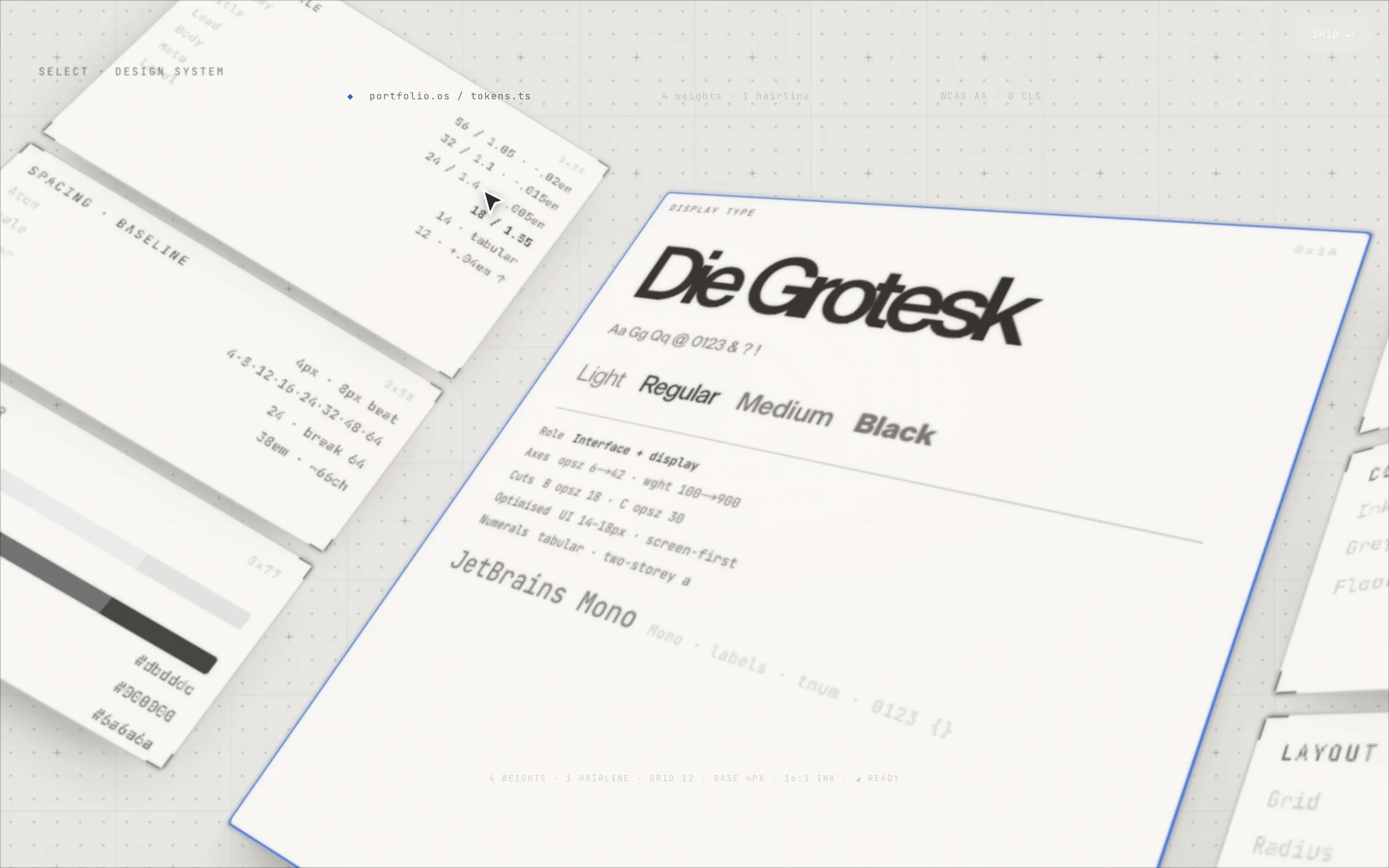
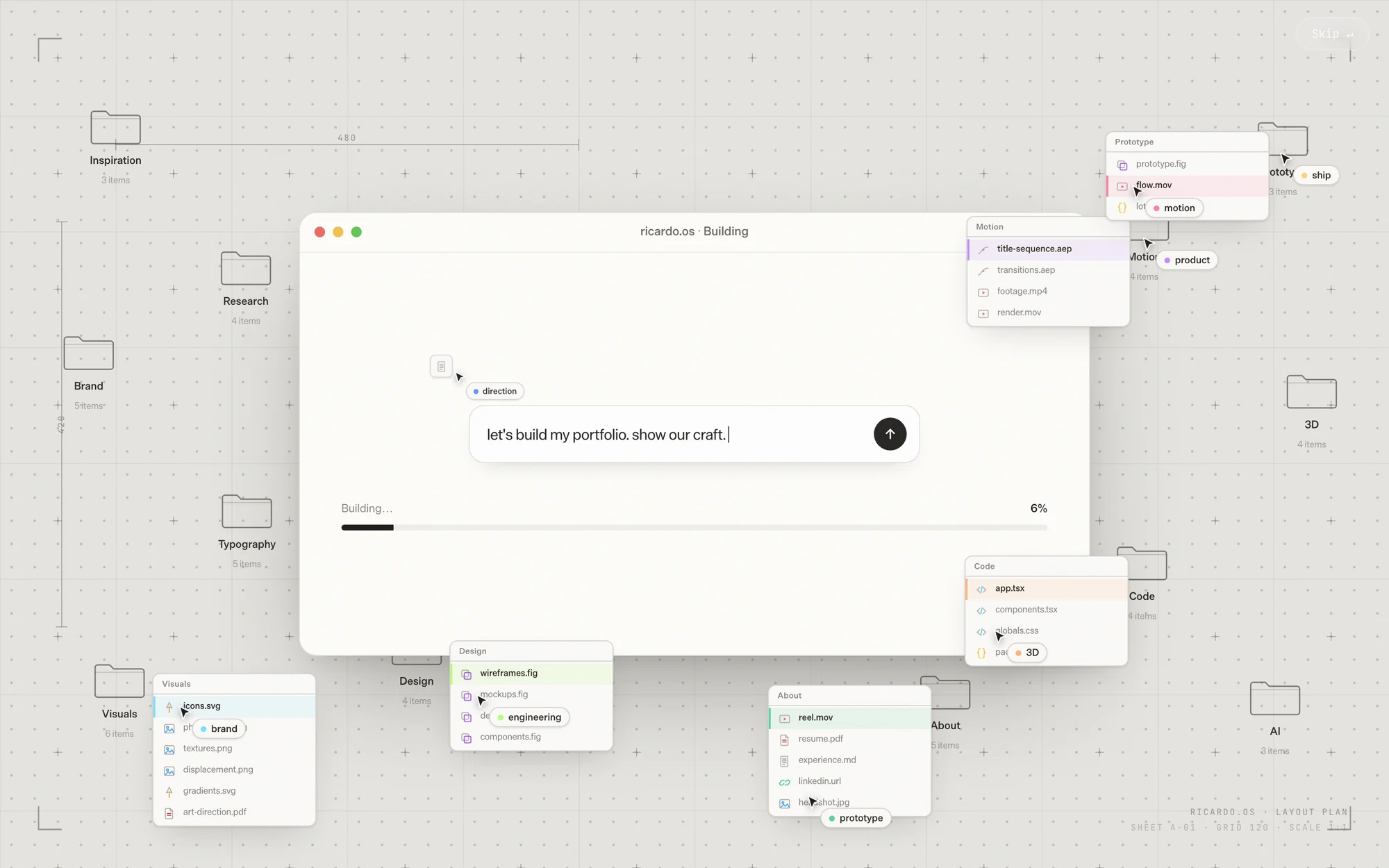
It starts inside a text field. A line types itself: let's build my portfolio. show our craft. One cut to a close-up, a click, and the camera pulls back to find the field was sitting on a desktop. Eight cursors fly in from off frame, each labelled with a craft: direction, product, prototype, 3D, motion, brand, engineering, ship. They open folders, pick files, carry them into the prompt. Two close-ups follow. In the first I choose the typeface and the palette. In the second I bend an ease curve. Then light floods the frame and the portfolio is standing there.
I would have built that in After Effects, with a team. A motion designer to animate it, a product designer for the UI inside the frame, a front-end developer for the web version, and someone who writes WebGL for anything with real light in it. My job was the story: where the cuts land, how long each shot holds, which moment earns the close-up. I set that and the team built it.
This time I directed agents.
It was not one shot
Sixty-four passes went into the film between June 22nd and August 31st. Fifty-seven of them landed in five days. Changing a beat meant changing a number, so a pass cost a reload.
The log reads like notes to a motion designer. More bounce on the overshoot. Shot C types at Shot A's speed. Remove the vignette, dial the soft focus way down.
References worked the way they always have. The look on the style-tile close-up is written into the file as a twin-lens Rolleiflex and an Arne Svenson soft focus. That is what I would have said to a photographer, and it is what got me the frame.
One pass brought in a WebGL ripple I had written for a different project: three concentric waves with a decay envelope and a caustic highlight riding the peaks. It fired on the button press and spread light across the zoom-out. It worked, and it made the transition messy. I pulled it and kept the file.
What the web gives back
The last frame washes to the exact background colour of the page behind it, so the film dissolves into the live site. A video would have to cut there.
No two playbacks match. The eight cursors travel curved paths with randomness in every move, and each one takes a file at random from whatever folder it opened.
The page transfers 325 kilobytes and none of it is video, so the film starts the moment the page does. Reduced motion skips it. On a phone the site skipped it too, and opened on a two-second loading screen instead.
What made it work
The brief is the same job it always was. What changed is who reads it.
The first close-up tilts thirty degrees and the second leans fifteen the other way, so the two cuts answer each other. I asked for the angle by name and I knew what it would do to the shot. That is what gets the frame out of an agent, and it is why I can do more of the work I was already good at. Sixty-four passes, and the film has never been rendered once.
Next up
All posts- When the agent is the userWhat experience design looks like when an agent is the one using the interface, and what happens to the human experience when more of the journey is mediated by AI.
- Get the framing rightWhy the shape of the problem decides the solution, and how one equation inside discovery keeps a team honest.
- It's not the machine. It's the bean.A small fruit from Colombia, and what it taught me about process, patience and the right conditions.