Banfield
Creating the future of pet parenting.
Banfield is the largest general veterinary practice in the United States, and Mars is the company behind it. They wanted a pet parent lifestyle brand and digital destination that would make Banfield part of a family's life between visits. I did the UX on a small team at Fantasy, worked the strategy out with a content strategist, and some of the interface was mine.
Highlights
- For the first-time pet parents the pandemic made
- Built to do both: pet care and the everyday
- From a photograph to a vet's answer in one thread
- Social concepts, each with its reason to exist
- One point of retention, $21M, in a five-year model
Problem
Banfield's relationship with a pet parent ran through its hospitals and its doctors: a checkup, a visit when something was wrong, a few times a year. The Optimum Wellness Plan had 2.4 million members, and Banfield's own brief put the problem plainly: little perceived value for a paid plan. The company spent about $700K a year winning new clients and almost nothing keeping the ones it had. One point of retention was worth $21M over five years.
The ask had a second half. The pandemic had made a wave of first-time pet parents, people with a new animal at home and questions about everything, and Banfield and Mars wanted to be the place they turned to. So the brief was to reimagine pet care for that new generation of pet parents while keeping the customers Banfield already had. An app opened twice a year around a visit would do neither.
We designed for both kinds of day. The day something is wrong, when a pet parent needs a vet's answer fast, and every other day, when they want to share the good things about living with an animal. One app had to do both.
The approach
The strategy fits on one slide, and it is a change of direction.
- One-off interactionsOngoing conversations
- TransactionsRelationships
- Tools driven by functionSupport built into features
- Reactive effortsProactive engagement
- A linear pathAn immersive experience
The product that came out of it has three sections, and the order is the argument. Be informed, on your pet's health and wellness. Take action, based on what you have learned. Stay engaged, through fun, social and shoppable interactions. Community, content and care together, in the brief's own words, so that Banfield is relevant every single day. The work ran in two halves, in that order: the medical journey first, then the social vision.
The medical journey
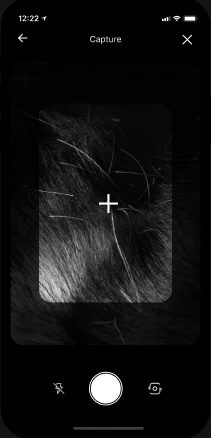
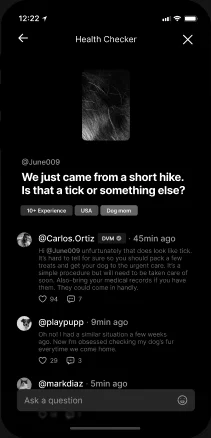
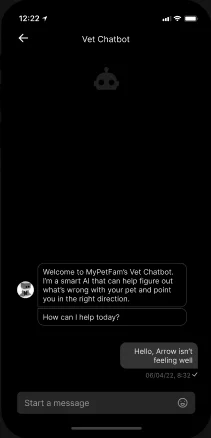
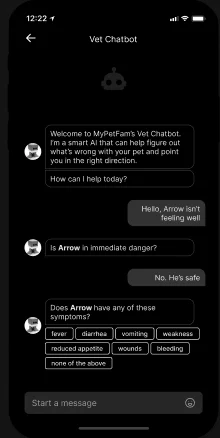
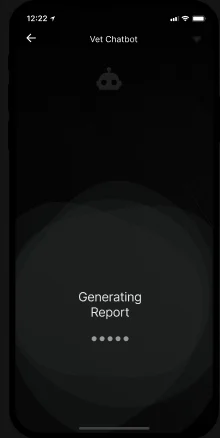
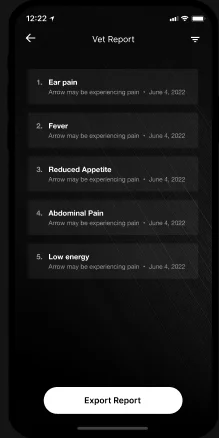
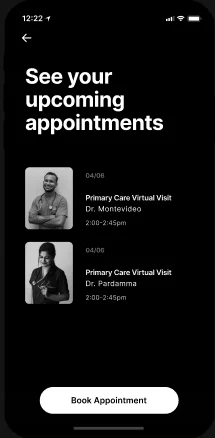
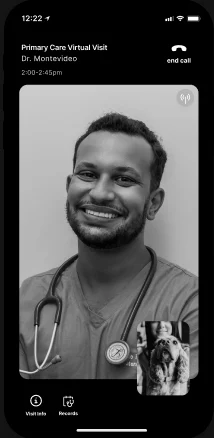
The medical half came first. It starts with what a pet parent is already holding: a phone. A first-time pet parent's questions are small and constant, whether the dog can have blueberries, what that lump is, and the answer had to come from a vet rather than a search result. Something found in the fur after a hike becomes a photograph, then a question for the community, then a vet's reply, without anyone leaving the app to find help. A chat with the vet becomes a report the parent keeps and can hand to a clinic, and a video visit is booked from the same place. Records, medications and the next appointment sit under the pet's own profile, so the clinic and the app describe the same animal.
After a procedure the parent tracks symptoms and gets advice until the animal is well again, and before a trip they leave the pet sitter a checklist. Both are the app being useful on a day the hospital is closed.
How it was made
A Fantasy engagement in 2022. I came in at the first concepts, and my seat ran through both halves: the strategy alongside a content strategist, the flows and the wireframes of the medical side and of the social concepts, and some of the screens alongside the visual designer. The deliverables were the argument for Banfield's leadership: the concepts, the prototypes, two films, and a five-year model that gave the design a number to stand on.
We designed one app for the hard night and the good day: a vet's answer when something is wrong, and the walk, the photo and the friend down the street the rest of the time.
Banfield and Mars leadership, their CMO and VP of Product Marketing among them, signed off on the vision in 2022 and wrote that the five-year model behind it looked very solid.
“So much of your team's hard work went into this and it looks great. Please thank everyone for their help in making this happen, especially Ricardo.”


The social vision
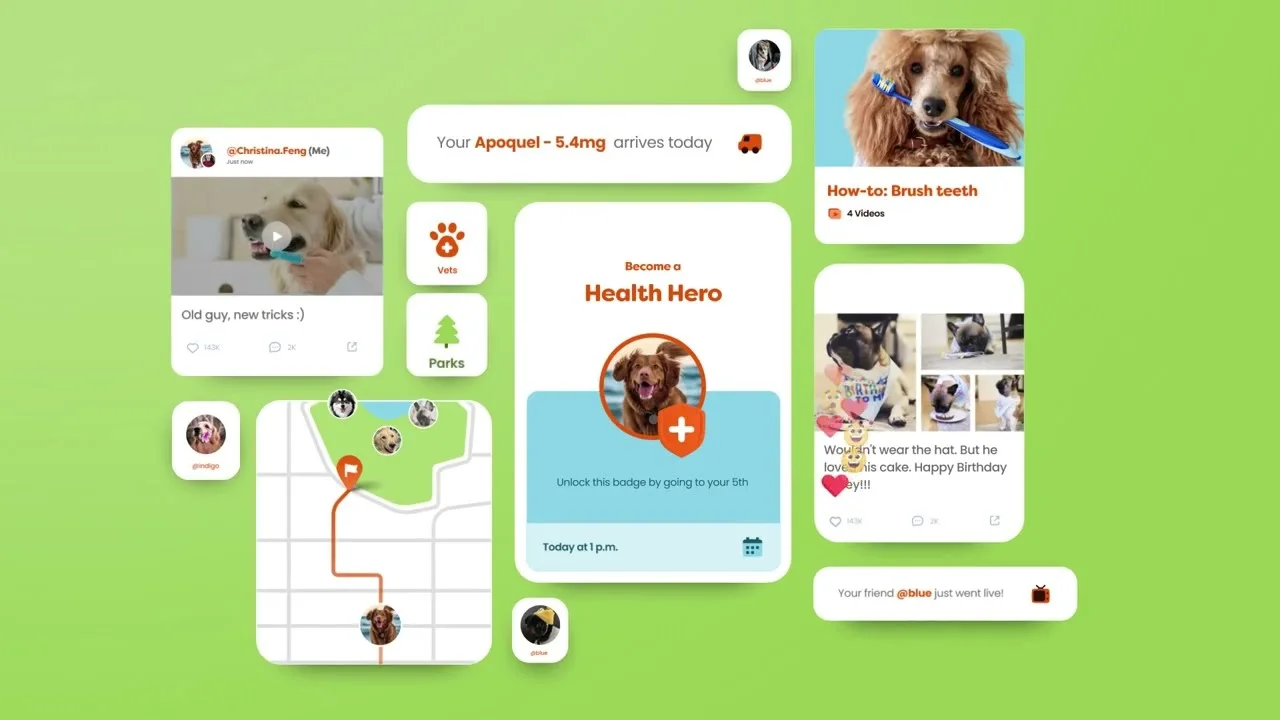
The social half came second, and it grew into the larger part of the work. It is the reason to open the app on the other days. Pet parents have plenty they are proud of: the photo, the walk, the new friend at the park, the puppy that will one day be a dog. So the second phase produced a large set of social concepts, each written up with a description and the reason it matters, and taken to flows. Five of them are here.
Walk with a purpose
Log the daily walk towards a charity walk-a-thon, with a team. It gives a purpose to the one thing every dog parent already does, and a reason to come back every day.
Play dates
Find a pet nearby to meet at the park. A connection that starts on the phone and finishes outside it.
Ask me anything
Live sessions with vets and pet experts. Fun questions for the pet celebrities, medical ones for vetted practitioners.
Gift box
Open a box each week for a digital gift, and sometimes a real one. A reward for the pet parents who show up often.
Growing pup
See what a puppy or a kitten could look like grown. A lifetime with the animal, pictured in a few taps.